
Many Maryland drivers are surprised to learn that a speeding ticket is technically a misdemeanor under state law. While most people think of speeding as a minor traffic infraction, Maryland’s Transportation Article actually classifies nearly all moving violations — including speeding — as misdemeanors unless the law specifically designates them as civil offenses or felonies.Read More
Do You Have to Open the Door for Police (Noise Complaint)?

If the police show up at your door because of a noise complaint, you might wonder — do you have to open the door? In Maryland, the answer is generally no. You do not have to open the door for police responding to a noise complaint unless they have a warrant or an emergency reasonRead More
Do You Have to Roll Down Your Window for a Cop?
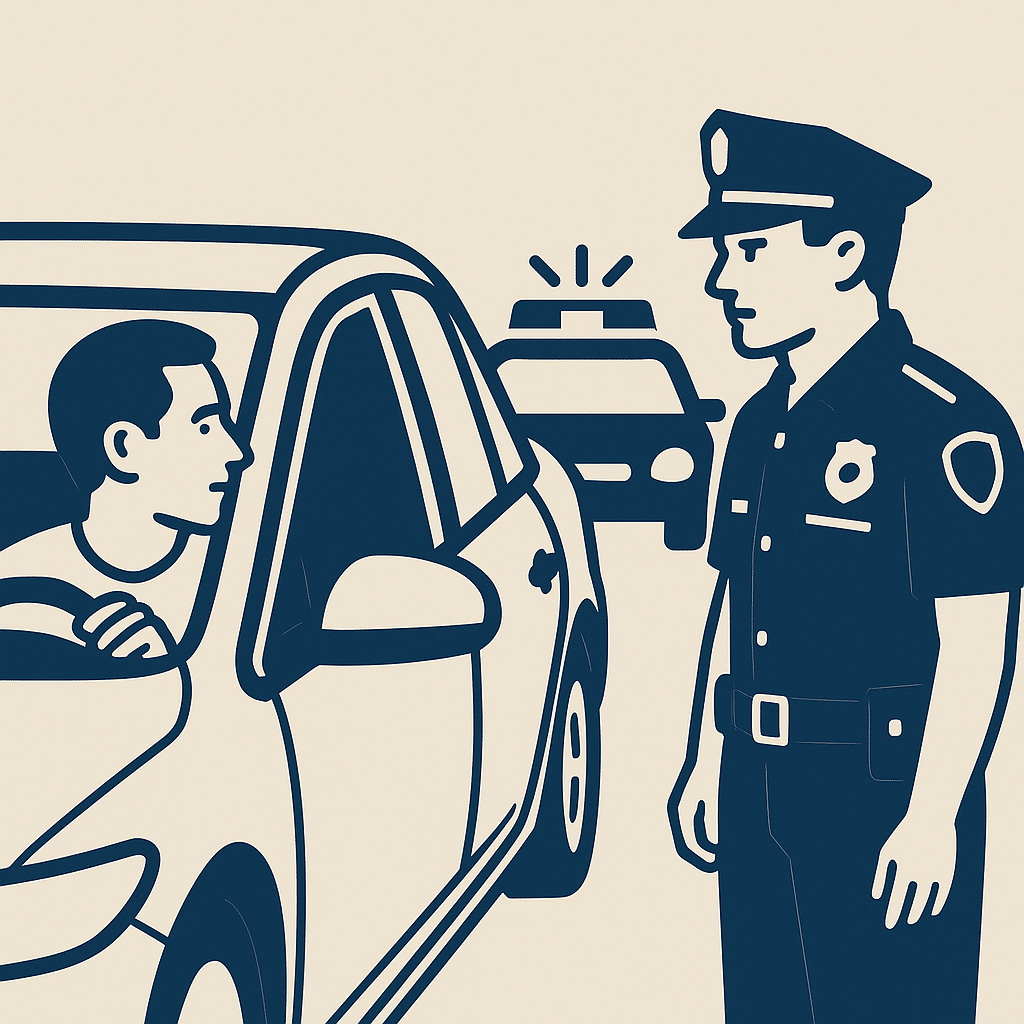
If you’ve ever been pulled over in Maryland — whether in Prince George’s, Charles, Calvert, or St. Mary’s County — you’ve probably wondered: Do I have to roll down my window for a police officer?The short answer is that no Maryland law explicitly requires you to roll your window down during a traffic stop. However,Read More
Can a Cop from Another County Pull You Over?
If you’re driving in Southern Maryland — whether in Prince George’s, Charles, Calvert, or St. Mary’s County — you may wonder: can a cop from another county pull you over? The short answer is: sometimes. But the full picture under Maryland law is more complicated, and understanding it can protect your rights if you’re everRead More
Inventory Search in Maryland: What It Means and When Police Can Use It
When your vehicle is impounded and a police officer conducts an inventory search, it’s important to understand what that means for your rights—especially if you’re facing criminal charges in Maryland. In this article, we’ll explain what an inventory search is, when it can be lawfully conducted, what the requirements are under Maryland law and federalRead More